 GrowthOps
Reading recommendations
Recommendations lists the change worth making on each page — and keeps the verdict afterwards, including the ones that did not help.

Filter by brand, by status — Open, Applied, Measured, Dismissed — and by kind of finding.
Each row says three things: which page, what is wrong with it, and where it stands.
Where the finding is about the title and description, the words the page never says are listed in full rather than summarised — how many of them there are is the size of the finding — and beyond three, +3 and the like open the rest in place. A finding about what the page opens with names no words: there, what is missing is a sentence near the top at all, and the row says so instead.
Three kinds of finding
- title & description — the page ranks and is not clicked, and its title and description never say the words people search for.
- what the page opens with — the page's opening prose never mentions what it is found for. The search engine writes its own snippet from what a visitor sees first, and uses that before your description.
- not indexed — Google is not indexing the page. The row carries Google's own label, as it appears in Search Console's Page indexing report.
Where each one stands
Every row says where its page stands, in one line:
- not yet applied
- pull request open — waiting for the merge, or edge rewrite set — waiting to be seen live — the change is on its way
- applied — verdict due, followed by the date — being measured
- measured as an improvement, measured, and it did not help, measured, and it did worse, or not enough evidence to say
- dismissed
A verdict is said plainly. Its whole value is that it can be unflattering.
The case for one page
A row is a link. Following it opens that page's own case at its own address, so it can be sent to whoever is going to make the change.
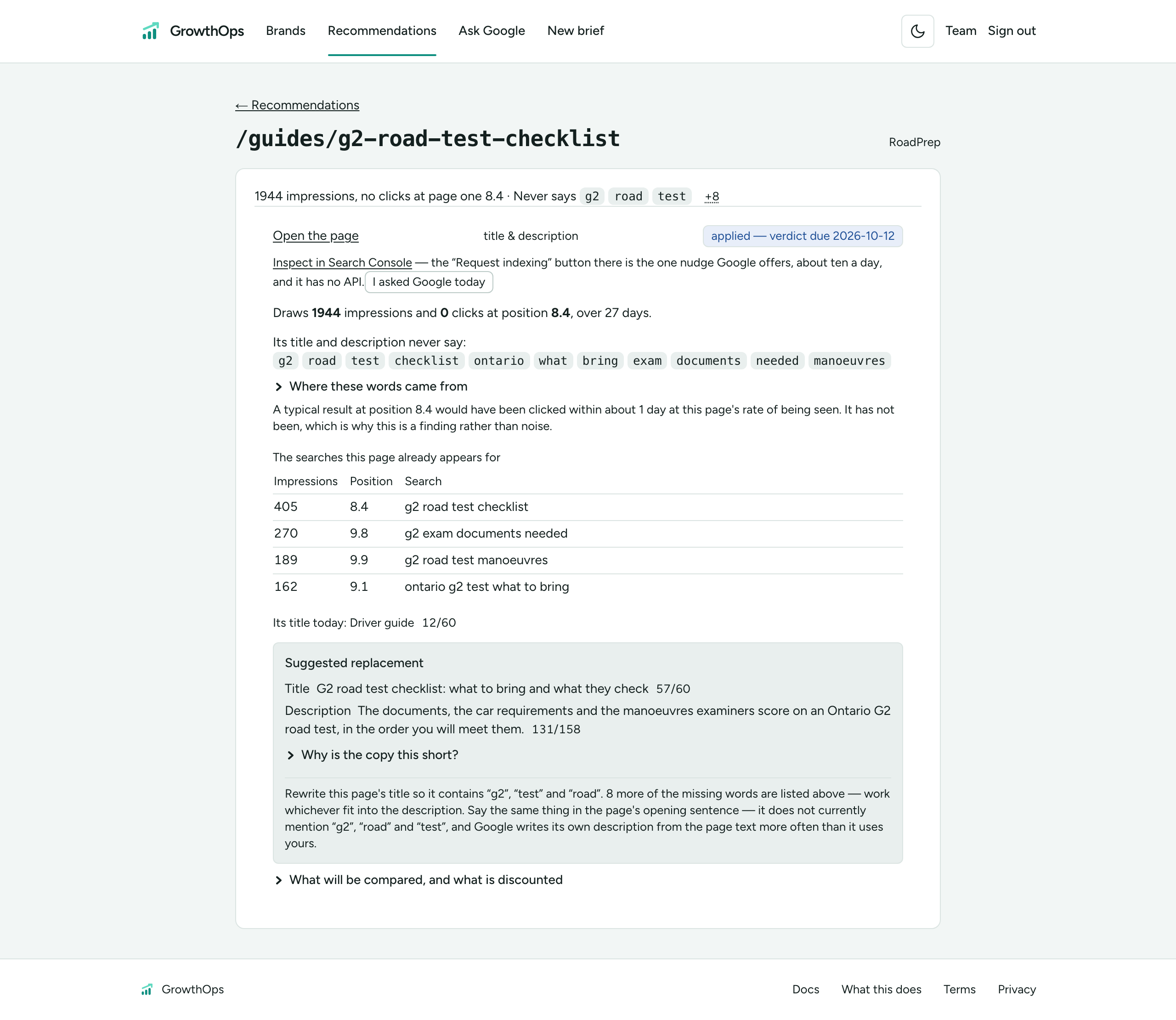
It carries:
- the finding repeated from the row, so you never have to check which one you followed;
- The searches this page already appears for — impressions, position and the search itself, for the handful carrying most of the page's demand;
- the words the title and description never say, and the searches they come from;
- the title today, and a suggested replacement written to fit what Google shows — about 60 characters of title and 158 of description;
- once applied, when readers first saw it and when the verdict is due. The 28 days count from when the change is live for readers, not from when you pressed the button, and nothing else should change on the page until it is measured.
Its More lines answer the questions the evidence tends to raise — where the words it names came from, why the replacement copy is that short, and what the verdict will and will not compare. They are closed until you ask, so the page reads as a decision rather than as a briefing.